
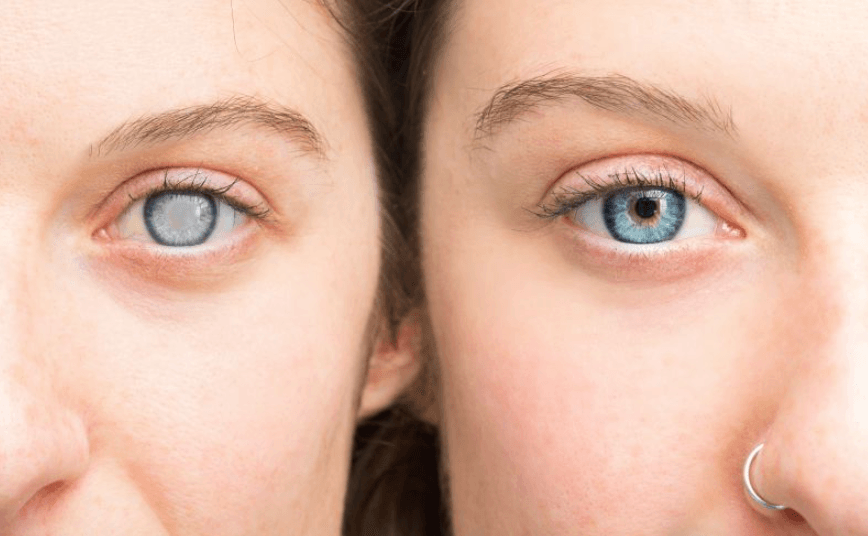
Our eyes work similarly to a camera. We all have a natural lens inside of our eye, behind the iris (the colored part of your eye). The job of the lens is to allow our eye to focus in the distance and up close. The lens slowly loses its ability to focus over time, typically causing difficulty with our near vision without reading glasses. This lens also works as a natural filter, absorbing harmful UV light and protecting the retina from UV damage. Because of this, along with other natural metabolic changes in our body, the lens will get cloudy over time. A cloudy lens in the eye is called cataract. Cataracts typically develop gradually, but certain conditions like diabetes or trauma to the eye can make it cloud more quickly. Cataract surgery replaces the cloudy lens with a clear intraocular lens implant (IOL) that stays clear for the rest of one’s life and can even provide independence from distance and/or reading glasses. Cataract surgery is the most commonly performed procedure in the United States!
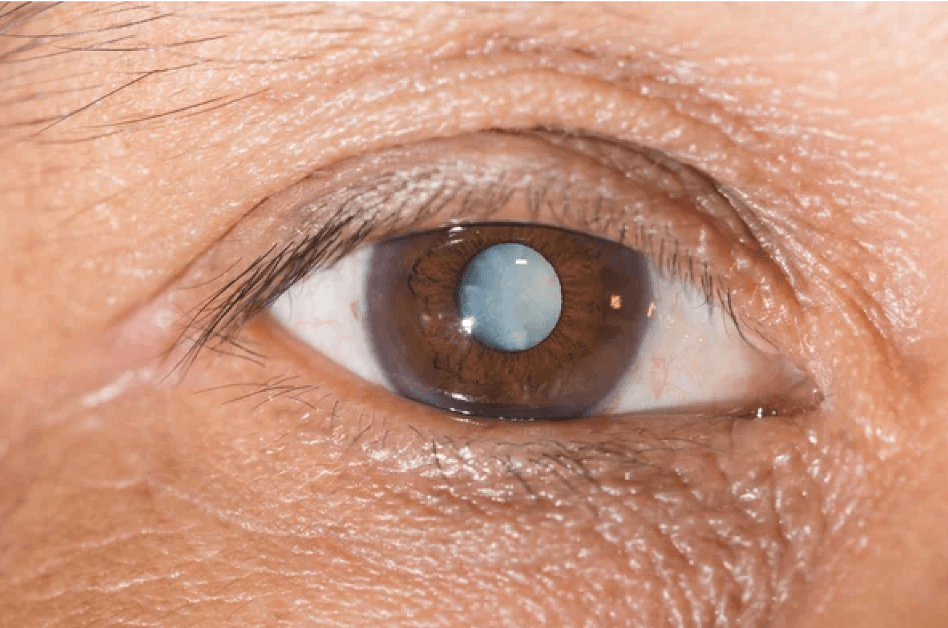
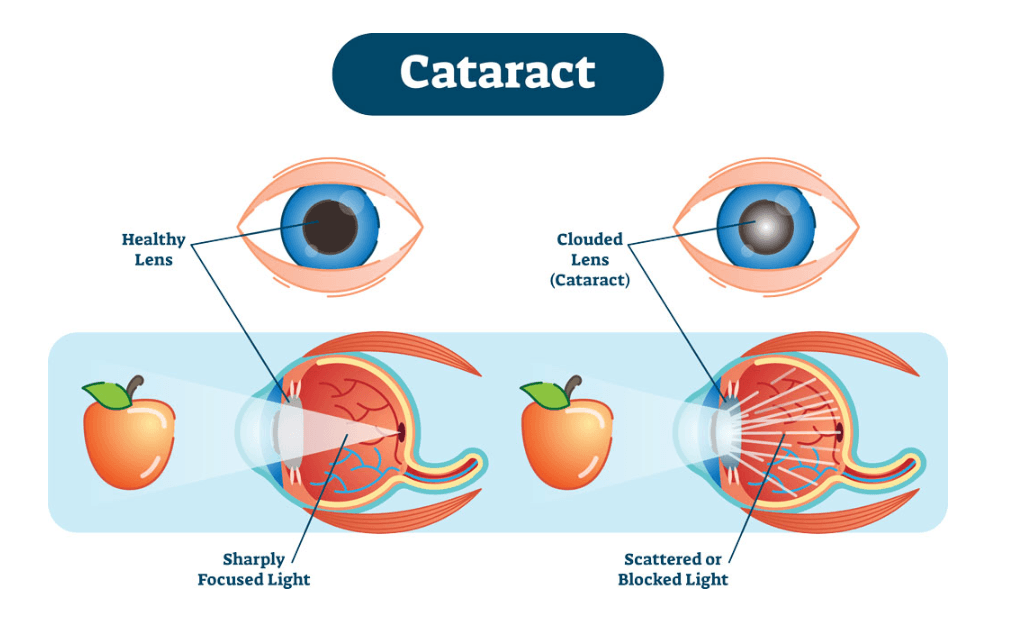
These signs of cataracts should not be ignored, especially if they impact daily activities.
Cataracts are a natural part of aging for most people, and therefore are not entirely preventable. But there are ways to slow their progression:
The good news is that the loss of vision due to cataracts is reversible. And for many, this is a great opportunity to say goodbye to wearing glasses altogether!
Although cataracts don’t usually require urgent medical attention, finding a solution sooner can make life much more enjoyable. Like most changes in our bodies, it’s not uncommon for us to postpone doing something about it until it starts interfering with daily life. After all, we grew up hearing our parents and grandparents talk about cataracts as something that happened much later in life.
In the early stages, when one’s vision is “not bad enough” but also no longer great, we make small, practical adjustments without even thinking about it: turning up the lights when reading, updating glasses prescriptions more often, changing dinner plans to avoid driving after dark, or scrolling through reels about the magic eye drops that promise to fix everything.
These lifestyle adjustments only delay the possibility of fully enjoying our most important sense. The truth is, the level of activity and visual demand in our daily lives today far exceeds what our parents experienced at our same age.
The good news is that cataract surgery has come a long way. Modern technology makes the procedure safer than ever and allows for a more personalized outcome, one that can match our lifestyle and expectations.
Ultimately, cataract surgery isn’t just about restoring what’s been lost, it’s an opportunity to take it a step further and experience freedom from glasses for most, if not all, of your daily activities.
The ultimate fix to making these lifestyle changes is cataract surgery. Here is how it’s doneCataract surgery is a quick, outpatient procedure done at a surgery center rather than in the hospital. While the surgery itself can take 20 minutes or less, plan to be at the center for about two hours. Before the procedure, the anesthesia team will give you what is commonly known as conscious or “twilight” sedation. During this “twilight” you are awake, but fully relaxed. Your eyelids are gently held open with the help of a small, comfortable device and the eye is numbed with anesthetic medication.
Two small sub-centimeter incisions are made on the side of the cornea and the cloudy lens is broken into smaller pieces using ultrasound energy, allowing its removal with a gentle suction tip. A clear lens, customized to your prescription and lifestyle choices, is placed in the same position of your natural lens. The incisions are small and heal on their own without sutures in the vast majority of cases.
After the surgery, you will go home with a protective eye shield over the eye and a pair of soft goggles to wear while sleeping for one week. You’ll start your prescribed eye drops the same evening. The next day you will return to Clearview for your 1-day post-op visit so we can check your healing and vision progress. Many patients are seeing clearer and more vibrant by the very first day after surgery!
We believe advanced technology should be a part of great care and laser cataract surgery is one of the tools that is a part of our routine care.
During cataract surgery, we use a small device that applies ultrasound energy to break up the natural lens inside the eye. With laser-assisted cataract surgery, laser energy is used to soften the cataract before the start of the procedure. As a result, less ultrasound energy is needed to break up the natural lens. Less ultrasound energy used can mean lower inflammation after surgery and quicker recovery.
The laser is also used to make a perfect opening in the center of the lens “capsule”, allowing more precise, predictable centration and positioning of the new lens implant. Traditionally, this opening in the capsule has been made manually. Studies have shown that the laser is more reliable at making a perfect circular opening than even the most experienced surgeons.
Finally, the laser can also be used to correct or reduce astigmatism by making small peripheral incisions on the cornea. Correcting astigmatism is the key to providing independence from glasses after surgery.
When you have your cataract surgery with Clearview, we will help you navigate all of the options available in modern cataract surgery and make sure you receive the safest, most customized care for your eyes.
The advanced Catalys® system uses cutting-edge features for superior results:
Feature:Laser energy is applied only where needed, reducing tissue damage and post-op inflammation. The technology ensures a smooth cataract removal surgery.
While there is no perfect lens implant, there are several styles of intraocular lenses (IOLs). Each of these lenses perform best in certain situations. At Clearview, we are not beholden to a single manufacturer. We use any and all available lenses depending on a patient’s eyes and lifestyle.
Our team will provide personalized pre-surgery instructions based on your cataract surgery plan. Not ready for cataract surgery yet? Learn about Presbyopia treatments.
Astigmatism correction is critical in order to provide independence from glasses after cataract surgery. This correction can be achieved with a variety of methods
Dr. Sandy T. Feldman and Dr. Michael L. Mathison at Clearview Eye and Laser Medical Center in San Diego are among the best cataract surgeons in San Diego. With years of experience in both laser eye surgery and cataract surgery, the team at Clearview combines state-of-the-art diagnostics with personalized treatment planning. The Clearview team is especially adept at providing great outcomes for patients with a history of radial keratotomy (RK), photorefractive keratectomy (PRK), LASIK, SMILE, implantable collamer lenses (ICL), and keratoconus
Schedule your cataract surgery consultation today to explore your options for clear, improved vision.
Ans: No, cataract surgery is not painful. The procedure is performed under local anesthesia with moderate sedation. Most patients feel only light touch and mild pressure during the procedure. Post-operative discomfort is very minimal and manageable with eye drops.
Q2. What is the recovery time after cataract surgery?Ans: Most patients notice vision improvement within 24–48 hours. However, full cataract surgery recovery typically takes 2–4 weeks, during which you must avoid strenuous activities and follow your surgeon’s post-op care. There may be intangible improvements in the form of “neuroadaptation” for a full year after surgery.
Q3. Will I need glasses after cataract surgery?Ans: Depending on the IOL you choose, you may reduce or eliminate the need for glasses. Our team will counsel you on appropriate expectations after surgery.
Q4. How do I prepare for cataract surgery?Ans: Preparation includes pre-operative exams, adjusting medications, arranging transportation, and following fasting instructions. Your team at Clearview will give personalized advice based on your health and eye condition.
Q5. Are there risks associated with cataract surgery?Ans: Like all surgeries, cataract surgery carries risks such as infection, swelling, or retinal detachment. However, complications are quite rare. Cataract surgery boasts one of the highest success rates in medicine. Large studies demonstrate 95 to 98% of patients experience significant improvement in their vision. Cataract surgery is one of the most commonly performed surgeries in the world and boasts an exceptional satisfaction rate.
Q6. What lifestyle changes can help my eye health?Ans:Ans: Options include monofocal, extended depth of focus, and multifocal lenses. These lenses are offered in spherical and toric versions. More specifics on the different types of IOLs are outlined above. Your Clearview team will help you choose the best fit for your visual goals.