By the ophthalmology team at Clearview Eye and Laser Medical Center, San Diego
If you have noticed a small, pinkish growth creeping across the white part of your eye, you are not alone. This is one of the most common concerns we see in our San Diego clinic, especially among patients who love spending time outdoors. The good news: it is almost always a benign condition called pterygium, and there are effective ways to manage it and protect your eyes going forward.
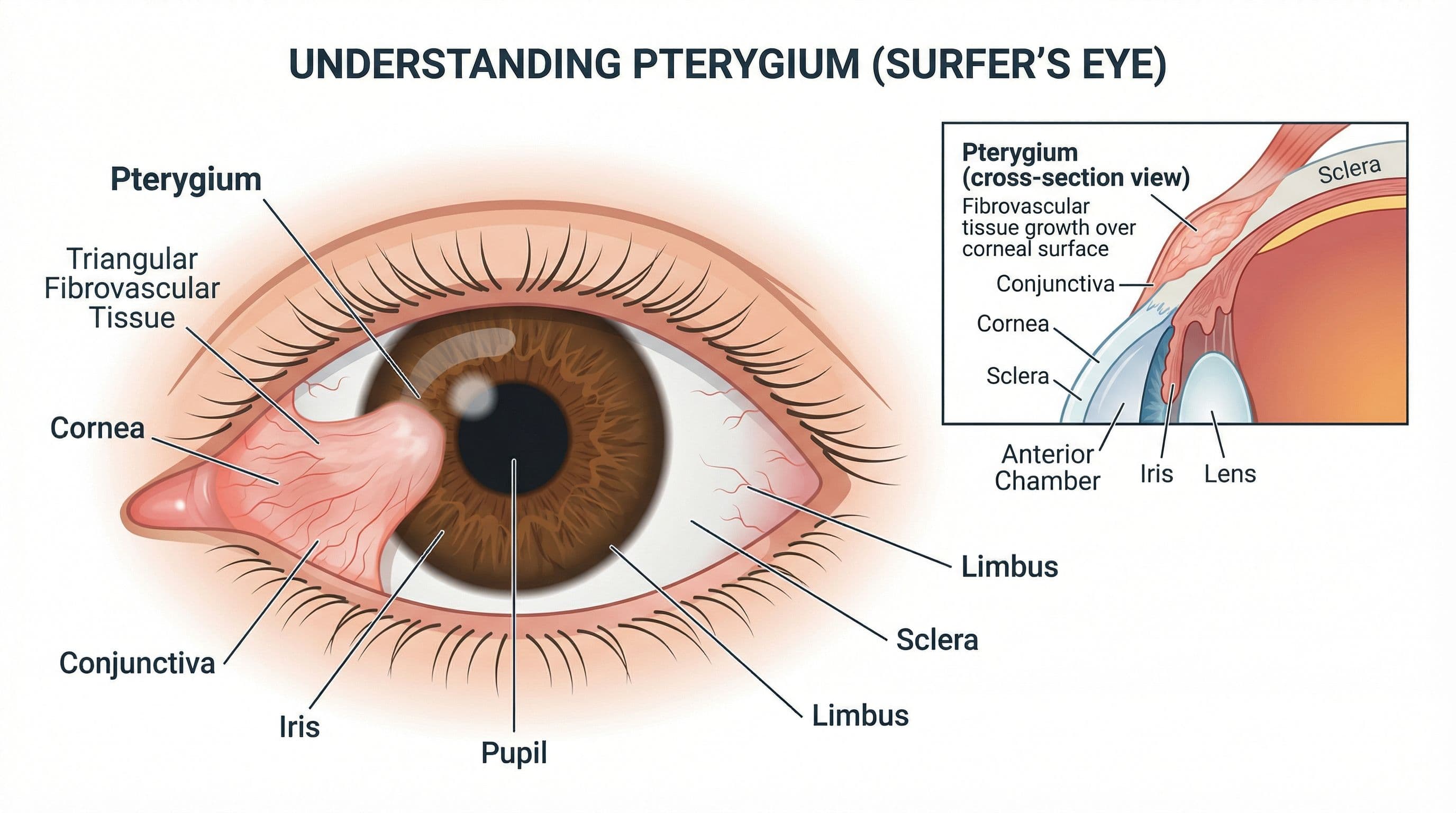
A pterygium (pronounced “ter-IJ-ee-um”) is a benign, fleshy, wedge or triangular shaped growth that develops on the conjunctiva, which is the clear, thin tissue that covers the white part of your eye. The growth typically starts in the corner of the eye closest to the nose and can slowly extend toward or even onto the cornea, the clear front surface of the eye that covers your iris and pupil.
The name comes from the Greek word pteryx, meaning “wing,” because of its wing-like shape. You may also hear it called “surfer’s eye.” That nickname exists because the condition is especially common among surfers and others who spend long hours outdoors in sun, wind, sand, and salt water. However, you certainly do not have to be a surfer to develop one. Anyone who spends a significant amount of time outside without proper eye protection can be affected.
A pterygium is not cancerous, and it will not spread to other tissues in your body. However, if it continues to grow across the surface of the eye, it can eventually affect your comfort and your vision, which is why keeping an eye on it and knowing your options is important.
It is believed that the main risk factor of developing a pterygium is chronic exposure to ultraviolet (UV) light of the sun. UV rays may cause alterations in the conjunctiva tissue with time and promote abnormal development towards the cornea.
In addition to UV exposure, several other environmental and lifestyle factors may play a role:
Pterygium has nothing to do with infection, screen time, or something you did wrong. It is a reaction to the long-term exposure to the environment, and it is highly prevalent in such locations as San Diego where people live in the sun and outdoors.
A pterygium first catches the eye of many patients when they look in the mirror: a raised, pinkish or whitish bulge, with small blood vessels visible on its surface on the eye. It can lead to no discomfort whatsoever in its initial stages. Symptoms that may occur as the growth progresses may include:
Once a pterygium starts to spread over the cornea, it may begin to drag the surface of the cornea and shape it. This deformity may lead to astigmatism, an abnormal curvature of the cornea that makes your vision blurred, or it may result in not being able to wear contact lenses comfortably. In more severe instances, when the growth goes so far into the centre of the cornea, it may directly hinder the line of vision and have a profound impact on eyesight.
You might have heard of the name pinguecula, which is a similar but different disorder. Pinguecula is a small bump on the conjunctiva, which is yellowish in colour and is normally located close to the cornea. It is formed due to similar causes, the main ones being long-term exposure to UV and the environment. The point of difference is that a pinguecula is not growing on the cornea, whereas a pterygium is. In some cases, a pinguecula can evolve into a pterygium. During an exam, you can easily distinguish the difference to your eye doctor.
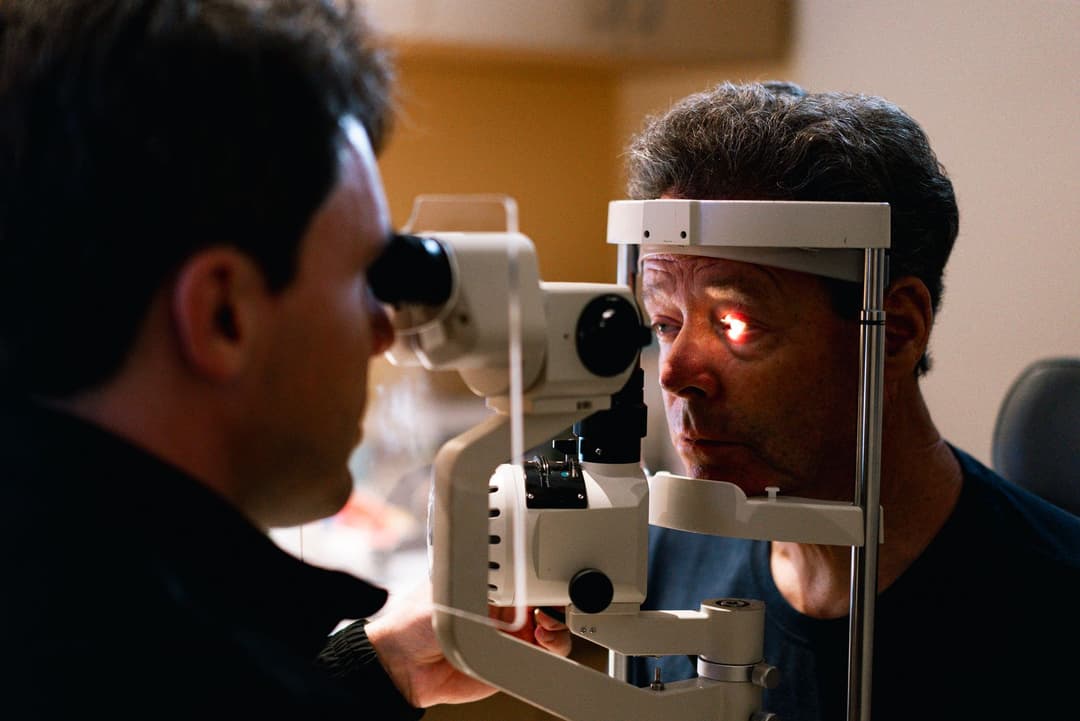
The diagnosis of a pterygium is generally easy. Your ophthalmologist will carry out a slit lamp examination, which is an examination that involves the use of a special microscope through which a narrow beam of bright light is directed to the eye surface. This enables an enlarged and close-up view of the conjunctiva, the cornea, and the growth itself. A pterygium is identifiable on the eye in most instances during this examination.
In case there are doubts regarding the vision changes, your doctor could also measure your corneal shape to identify astigmatism and other deformities that the growth may have caused. In uncommon situations, when a growth appears abnormal, additional testing can be carried out to eliminate other diseases. This is among the reasons why it is so important to have any new or changing growth in the eye that should be assessed by an eye care professional.
Pterygium treatment is based on the size of the growth, the symptoms it presents, and whether it is impacting or threatening your vision.
Watchful approach is usually advised in cases of small and silent pterygia that are not causing a lot of discomfort or vision alteration. Conservative alternatives are:
Pterygium surgery can be advised in the following cases:
Whether to have surgery is always a discussion between you and your physician, considering your symptoms, your vision, your lifestyle, and your personal preferences.
If you and your doctor decide that surgery is the right step, here is a general overview of what the process involves.
Pterygium surgery is an outpatient surgery and this implies that you go home on the same day. The operation is done under local anaesthesia and hence you are numbed and feel comfortable all through. In the process, the surgeon removes the pterygium tissue on the eye surface with care.
In order to reduce the possibility of the growth reoccurring, a small section of healthy conjunctival tissue, usually taken elsewhere on the same eye, usually beneath the eyelid, is applied to the site where the pterygium was excised. This procedure is referred to as a conjunctival autograft and it is regarded as the standard of care in pterygium surgery since it has been linked to a much lower recurrence rate than the older techniques.
The operation usually lasts for around an hour. You might be wearing an eye patch or a protective shield for a brief time after that. Your surgeon is likely to give the post operative medications, most commonly antibiotic eye drops which aid in infection prevention, and steroid eye drops that help in controlling inflammation and healing facilitation. Generally, the eye requires the full healing for four to six weeks, however, quite a few patients experience significant improvements within the first week or two.
One of the biggest concerns is if the pterygium will come back after the operation. With the help of surgery methods such as conjunctival autograft, the likelihood of the pterygium returning has been greatly reduced. Numerous research works, point to the fact that recurrence is observed only in a very small percentage (single digits to low teens) of cases where an autograft has been performed. If the recurrence is to happen, the new growth will most likely be noticed within the first 12 months after the operation. One of the best means of minimising the risk is to comply with your surgeon's post-operative instructions, especially regarding the use of eye drops and protection from UV rays.
Whether you have never had a pterygium, are managing a small one conservatively, or have had surgery and want to prevent recurrence, the same prevention strategies apply. These are particularly important for anyone living in a sunny climate or spending regular time outdoors:
These habits are not just good for preventing pterygium. They also protect against cataracts, macular degeneration, and other sun related eye conditions.
It is always a good idea to have a professional evaluation if you notice:
While pterygium is the most common cause of a fleshy growth on the eye, other conditions can look similar. Having an eye care professional examine the growth ensures an accurate diagnosis and allows you to discuss your options early, before the growth has a chance to progress.
At Clearview Eye and Laser Medical Center in San Diego, comprehensive eye care is at the core of everything the practice offers. Whether you are coming in for a routine eye exam, need guidance on UV protection strategies, or are considering pterygium removal, the team provides a thorough, personalized approach.
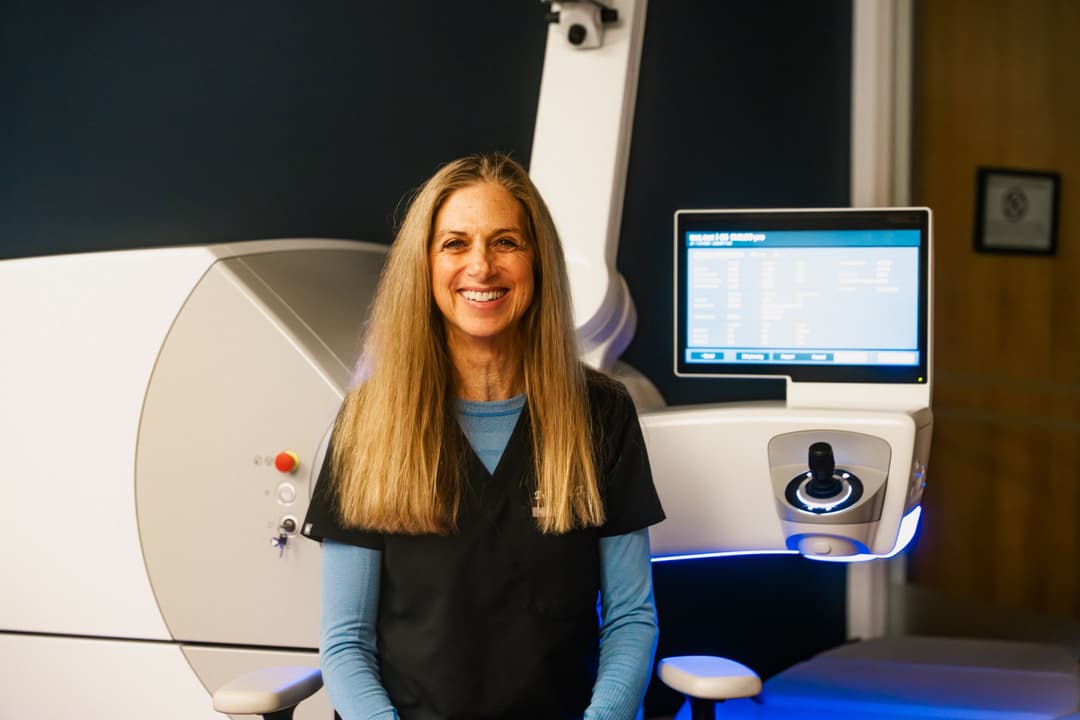
Clearview offers advanced pterygium removal surgery, including modern grafting techniques designed to minimize recurrence and restore both comfort and appearance. Every treatment plan starts with a careful evaluation and an honest conversation about whether and when to proceed, based on your vision, your symptoms, and your lifestyle. Led by Dr. Sandy T. Feldman, the team is committed to helping each patient achieve their best possible eye health.
Pterygium is a common, non cancerous growth related to UV and environmental exposure. It can range from a minor cosmetic concern to a condition that affects comfort and vision, but effective treatments and straightforward preventive steps are available at every stage. If you have noticed a growth on your eye, are experiencing persistent irritation or vision changes, or simply want to learn more about protecting your eyes in San Diego’s sunny climate, the Clearview Eye team is here to help.
Schedule your eye exam today by calling Clearview Eye and Laser Medical Center at (858) 452 3937 or visiting clearvieweyes.com to book a personalized evaluation and take the first step toward clearer, healthier eyes.