

Why Everyone Is Talking About Blue Light Glasses It is difficult to find an optical shop without blue light glasses, or you may have seen a flood of blue light glasses ads even on social media. The offers are never-ending: get over digital eye strain in a snap, shield your eyes from screen damage, get back your sleep, and even prevent age-related blindness. These glasses are available across the board price-wise, from going-to-the-pharmacy cheap to designer frames. If you are someone who spends hours each day working on a computer, scrolling on a smartphone, or gaming in the evening, the question comes up naturally: Do I need blue light glasses to keep my eyes healthy?
After teaching my patients about eye health and screen use research for years, I am now ready to guide you through the actual science. Some advertising claims for blue light glasses are based on real biology, but others go much further than what is supported by the evidence. The primary aim here is to help you distinguish between the facts and the hype so you can make a well-informed decision.
Blue light is one component of the visible light spectrum. It has very short wavelengths and, therefore, is very energetic. The visible spectrum includes the light from red to violet. The position of blue light is near the violet end, close to ultraviolet (UV) light. This high energy output is the reason why blue light is mentioned a lot in relation to health issues.
Sunlight: The sun is the strongest source of natural blue light. When you are outside on a sunny day, you get exposed to the sunlight in general and thus to the blue light it has in it to a much greater extent than if you were using a digital device.
Artificial lighting: Indoor lights, particularly LED and fluorescentbulbs, release blue light as a part of their spectrum.
Digital devices: Phones, tablets, computers, and screens emit blue light, though in much smaller amounts than sunlight. A significant point that often gets overshadowed in marketing is that blue light plays a vital role in your body.
Blue light exposure can alter the sleeping cycle by affecting the melatonin production. It increases the state of alertness during the day, thus helping the body's internal clock to be in harmony with the natural light-dark cycle.
We do not need to get rid of blue light. Instead, we need to be careful about how we take advantage of it.
Marketing claims for blue light glasses generally fall into three categories:
Reduce digital eye strain: The notion is that blue light filtering glasses will make your eyes feel less tired, dry, and uncomfortable after long hours of using screens.
Prevent long-term eye damage and diseases: Some advertisements claim that blue light glasses protect against retinal damage or age-related macular degeneration, presenting them as a preventive measure.
Enhance sleep quality: Mainly for the night, these glasses are alleged to keep your natural melatonin levels intact and thus, help you sleep more easily.
These claims are backed by literature that needs to be scrutinized for its authenticity.
Let me start with the most common concern: digital eye strain.
If you spend most of your workday at a computer and your eyes feel tired, dry, scratchy, or blurry by evening, you are not alone. Digital eye strain is real and increasingly common, especially since the COVID-19 pandemic accelerated remote work and screen dependency. The symptoms include tired eyes, blurry vision, dry eyes, headaches, and discomfort.
Here is what research shows: these symptoms are usually not caused by blue light itself. Instead, they result from how we use screens. When you focus on a near object like a screen for prolonged periods, your eyes work harder to maintain focus. More significantly, you blink much less. Studies show that blink rates plummet from a normal 22 blinks per minute to as few as 7 blinks per minute during screen use. Since blinking is how your eyes spread tears across the surface and keep them moist, reduced blinking leads to dryness, irritation, and discomfort. Poor posture, improper screen distance, and lack of breaks also contribute heavily to eye strain.
The influence of blue light is largely overrated. Recent studies, including a series of well-designed studies with random assignment to groups, have demonstrated little to no evidence that blocking blue light has any measurable impact on digital eye strain during normal working hours when compared to an unfiltered lens. Cochrane concluded in 2023 that blocking blue light does not appear to provide any benefit in reducing the symptoms of eye strain caused by prolonged computer use. More recent studies published in 2024 further support this conclusion.
In addition, AAO has not specifically recommended blue light blocking glasses as a treatment for digital eyestrain or eye diseases. AAO has stated, "There is no conclusive scientific proof that the types and amounts of light emanating from computers is harmful to your eyesight." Based on existing evidence, they cannot endorse any special eyewear designed specifically for computer usage.
Are we talking about chronic retinal impairment or macular degeneration? This issue is even more complicated. Experiments on animal retinas and cell cultures have indicated that extreme, long-term blue light exposure can lead to oxidative stress and cellular injury. Nevertheless, an important point is that the blue light emitted by your smartphone or computer is extremely less intense than sunlight. In fact, well-conducted research shows that the blue light dose from outdoor sunlight is 29 to 140 times higher than that from a typical computer screen. Besides, of course, the most important thing is that clinical evidence has failed to establish a direct link between the blue light emitted by screens and retinal damage in humans.
Some lab studies have hypothesized mechanisms, but the definitive evidence for a causal relationship between screen use and age-related macular degeneration in humans has not been found. Most of the studies highlight that the UV radiation they get from sunlight is a much bigger risk factor for retinal disease than the artificial blue light from screens, which is not that much of a concern after all.
This is where the science gets a little more complicated and where blue light glasses seem to have the most credible benefit.
It is the production of melatonin in the evening that helps your body recognize it is time to sleep. Blue light, especially in the 460-480 nanometer range, is capable of suppressing melatonin production and thus, delaying its release. So, if you are using a bright screen very close to your face at night, you are essentially exposing your eyes and brain to a light that resembles daylight and this might be one of the reasons why your body's natural wind-down process gets disrupted.
Several randomized controlled trials have demonstrated minor changes in sleep timing and subjective sleep quality of individuals wearing blue light blocking glasses in the evening, especially groups with insomnia or delayed sleep phase. One meta-analysis from 2020 showed slight, but still measurable, effects on total sleep time and sleep efficiency. In contrast, some newer studies with healthy adults and athletes found no improvement in objective sleep parameters (e. g. , sleep duration recorded by actigraphy) despite the fact that participants said they felt their sleep was better.
The image depicts a modest, mixed-outcome scenario. For certain groups, like teenagers who have a natural tendency to go to sleep late or adults who have been diagnosed with insomnia, wearing blue-light-blocking glasses in the evening may be somewhat helpful. The impact, however, is minimal and inconsistent for the general public.
What is more, healthier sleep patterns produce the same positive results regardless of wearing blue light glasses. Cutting down on screen usage one to two hours before sleep, lowering the room brightness, and employing the night mode of your device (that changes the screen to warmer, yellow colors) are time-tested methods that don't have any downside.
Here is my honest, balanced summary based on the evidence:
The majority of individuals do not require blue light glasses to safeguard their eyes or to stop digital eye strain. Studies hardly support the idea that they help in reducing eye strain during the day. The assertion that they halt retinal disease is not backed by human clinical evidence. If you were thinking about these reasons, the scientific community would not strongly support the acquisition of such glasses.
There are people who experience a self-reported feeling of comfort or their preference for blue light glasses, and it is a good decision if the expectations are set reasonably. Possibly you might discover that you like the fact that blue light glasses reduce glare, have a warmer tint, or give a placebo effect. If they really make you feel good, there is no harm in wearing them; however, you should know that this is probably a matter of comfort rather than prevention of a disease. Blue light glasses may offer modest potential for evening use in specific cases. If you have difficulty sleeping and consistently use screens in the evening, blue light blocking glasses could be one tool to try. However, they work best alongside other habits: reducing evening screen time, using device night modes, dimming your lights, and maintaining a consistent bedtime routine.
For most eye and vision problems related to screens, practical habits matter far more than blue light glasses. The 20-20-20 rule, proper ergonomics, blinking exercises, and taking real breaks are proven to reduce digital eye strain and improve comfort. These interventions are free and have no drawbacks.
Whether or not you choose blue light glasses, these steps will meaningfully improve your eye comfort and health:
Use the 20-20-20 rule. Every 20 minutes, take a 20-second break. Look at something at least 20 feet away. This rests your focusing muscles and allows you to blink normally, restoring your tear film. Set a phone reminder if you need to.
Adjust your workspace ergonomics. Position your screen about 15 to 20 degrees below eye level, roughly at arm's length away. Improper posture and distance are major contributors to eye strain.
Blink consciously. During breaks and while working, remind yourself to blink fully and frequently. Incomplete or rapid blinking leaves dry spots on your eye surface.
Adjust screen settings. Lower your screen brightness to match your environment. Use your device's night mode or "warm" display setting in the evening. These built-in features are free and effective.
Use artificial tears if needed. If your eyes feel dry during screen use, preservative-free artificial tears can help. Apply drops before you start your workday to create a protective barrier, or during the day as needed.
Schedule a comprehensive eye exam. Sometimes what feels like screen-related strain is actually caused by an uncorrected refractive error (nearsightedness, farsightedness, or astigmatism), presbyopia, or dry eye disease. An exam can rule out these conditions and ensure your vision prescription is optimized for your screen distance.
Limit evening screen time. This is one of the most impactful steps you can take for both eye comfort and sleep quality. If you must use screens in the evening, dim them and use night mode.
Digital eye strain is a genuine problem, in our opinion at Clearview Eye and Laser Medical Center, and we look at it from an individual perspective. Instead of thinking that everyone will benefit from a generic solution like blue light glasses, we first evaluate your case.
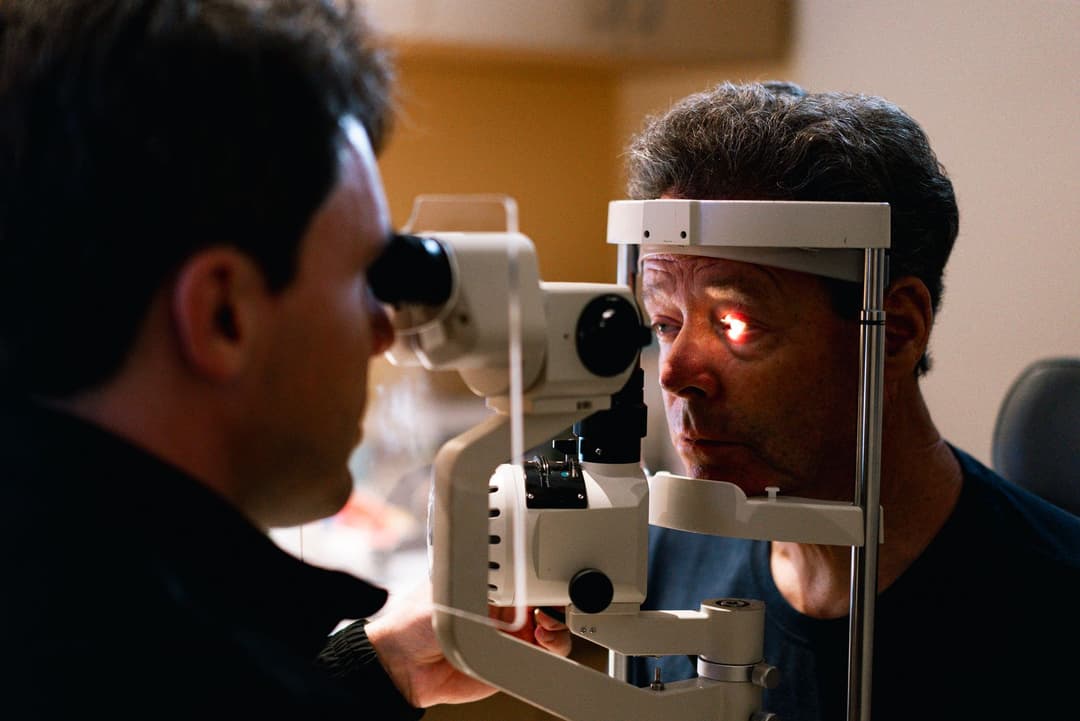
In the course of a comprehensive eye exam, besides checking your vision prescription and tear film quality, we also focus on your eye health as well as work and lifestyle situations. We let you know if your symptoms are related to dry eye disease, accommodative strain, uncorrected refractive error, or screen habits. As a result of this diagnosis, we suggest a variety of practical solutions, which can be ergonomic adjustments, artificial tears, glasses with an updated prescription, or even the use of blue light filtering as a single component of a wider plan.
We don't want to sell you a particular product; rather, we want to educate and personalize your care. You should be able to comprehend the research and make the right decisions for your eye health.
Blue light glasses are just one of the many options available for dealing with eye problems caused by screens. They don't offer a magic protection, and the marketing claims usually go way beyond the evidence. The great thing is that real and simple tactics for eye comfort are at your fingertips: taking regular breaks, setting up your workstation properly, blinking consciously, managing your tears, and having an up-to-date prescription. These are no-cost habits that can be effective for anyone.
If you live near San Diego and have problems with digital eye strain, sleep disruption due to screens, or you just want to keep your eyes healthy, schedule an eye exam with Dr Feldman or Dr Michael Mathison. During the exam, apart from vision testing, we can talk about your symptoms and lifestyle, and suggest personalized and evidence-based recommendations.
Your eyes are essential for all your activities. They should be treated with care that is thorough, scientific, and truly meant for their welfare.