If you have diabetes, you’ve probably heard warnings about taking care of your eyes. The concern is real, but the good news is that diabetic retinopathy is largely preventable and manageable if caught early.
Diabetic retinopathy is damage to the blood vessels in your retina caused by high blood sugar levels. It’s one of the leading causes of vision loss in working-age adults. The tricky part is that you might not notice anything is wrong until significant damage has already occurred.
This guide walks you through what diabetic retinopathy is, how to recognize early warning signs, the different stages of the condition, and what treatment options are available. If you have diabetes, understanding this condition could save your vision.
Your retina is the light-sensitive tissue at the back of your eye that captures images and sends them to your brain. Blood vessels supply oxygen and nutrients to keep your retina healthy.
When your blood sugar stays high for extended periods, it damages the walls of these tiny blood vessels. They become weak and start to leak. This leakage causes swelling and vision problems.
Diabetic retinopathy develops gradually. In the early stages, most people don’t notice anything wrong. That’s why regular eye exams are so important. We can see changes in your retina long before you have symptoms.
Your body needs insulin to control blood sugar. When you have diabetes, your body either doesn’t make enough insulin or can’t use it properly. This means your blood sugar stays elevated.
High blood sugar damages blood vessels throughout your body, but the tiny vessels in your retina are particularly vulnerable. They’re delicate and weren’t designed to handle persistently high glucose levels.
Each of these problems gets worse if blood sugar remains uncontrolled.
Diabetic retinopathy progresses through four distinct stages. Understanding these stages helps you appreciate why catching it early matters so much.
This is the earliest stage. You won’t have symptoms, and you won’t notice anything wrong. An eye exam is the only way to detect it.
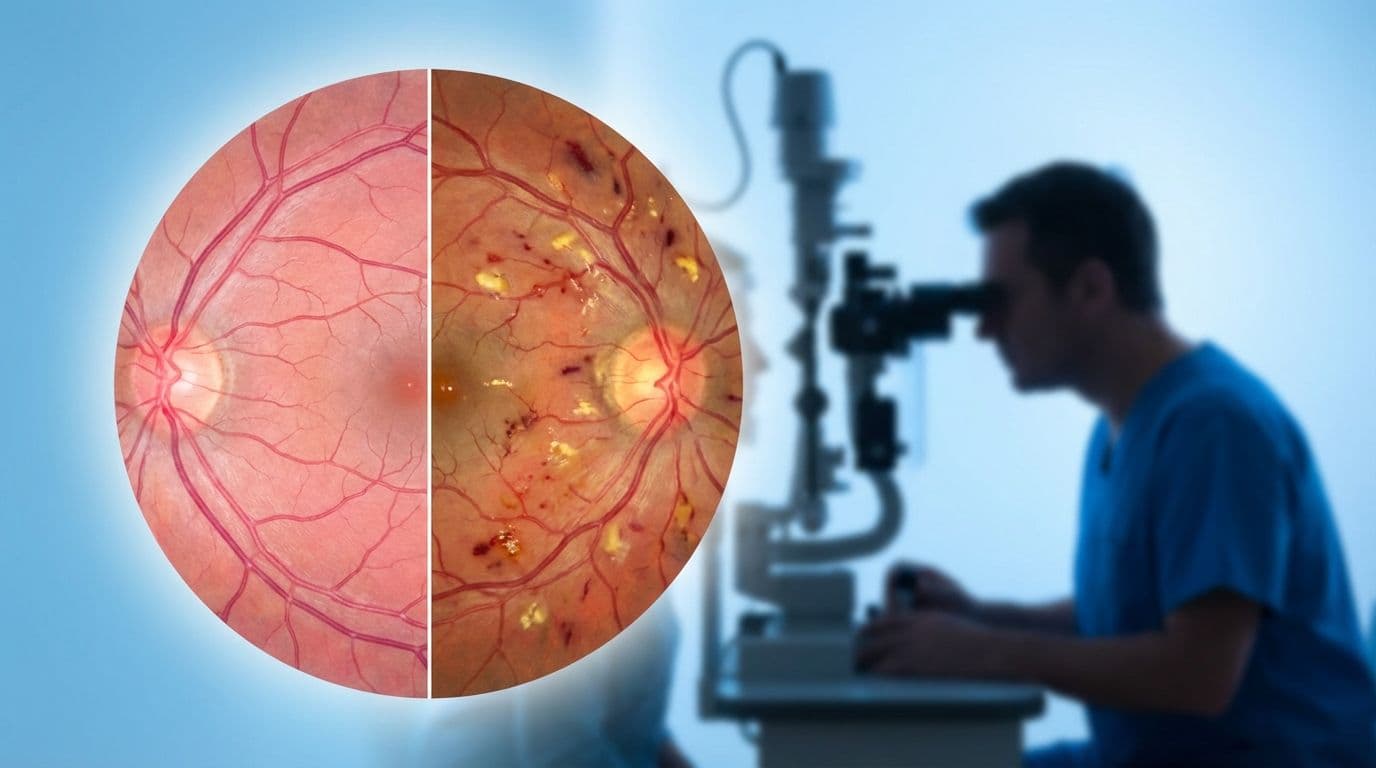
What’s happening: The blood vessel walls in your retina develop tiny bulges called microaneurysms. These bulges are weak spots where fluid starts leaking into the retina.
Your vision at this stage: Normal. You see just fine.
The importance: Even though you can’t see any problem, the damage has started. This is the perfect time to take action.
Blood vessels continue to weaken and leak more fluid. Some blood vessels are now blocked, cutting off blood flow to parts of your retina.
What’s happening: As more vessels swell and leak, the macula (the central part of your retina responsible for detailed vision) starts to swell. This is called diabetic macular edema, or DME. Hard deposits of cholesterol and proteins accumulate in the retina, creating white spots.
Your vision at this stage: You might start to notice blurred vision, especially in the center. Some people don’t notice symptoms at this stage either.
The importance: This is a critical point. If you’re not getting regular eye exams, you could miss the chance to intervene early.
Now the damage is significant. Large sections of blood vessels are blocked, starving parts of your retina of oxygen.
What’s happening: Your body recognizes the lack of oxygen and tries to fix it by growing new blood vessels. The problem is these new vessels are fragile and abnormal. They don’t work properly and cause more damage than they help.
Your vision at this stage: You likely notice blurred or distorted vision. You might see dark spots or blank areas in your vision. Your peripheral vision might be affected.
The importance: At this stage, you definitely need treatment. The progression to the next stage can happen quickly.
This is the most advanced stage. The fragile new blood vessels are bleeding, and scar tissue is forming inside your eye.
What’s happening: The fragile new vessels bleed easily, pouring blood into the eye. Scar tissue forms from the bleeding and growth of these abnormal vessels. This scar tissue can pull your retina away from the back of your eye, causing retinal detachment.
Your vision at this stage: Significant vision loss is likely. You might see lots of floaters from the blood in your eye. Your vision might be very blurry. Without treatment, blindness is possible.
The importance: This requires immediate treatment to prevent permanent blindness.
Here’s the challenge with diabetic retinopathy: you might not have any symptoms until serious damage has occurred. But there are some signs that warrant attention.
Important note: Many people with early-stage diabetic retinopathy have no symptoms at all. This is why regular eye exams are non-negotiable if you have diabetes.
Your risk of developing or worsening diabetic retinopathy increases if you have:
The good news: most of these risk factors are something you can influence through good diabetes management.
The only way to catch diabetic retinopathy early is through regular eye exams. This isn’t something you can diagnose yourself at home.
Who Needs Screening and When
If you have type 1 diabetes, you should have an eye exam within 5 years of diagnosis.
If you have type 2 diabetes, you should have an eye exam as soon as you’re diagnosed.
Severe or advanced retinopathy: multiple times per year
If you’re pregnant or planning pregnancy and have diabetes, you need eye exams during each trimester and up to one year after delivery.
What We Check During an Eye Exam
We start by dilating your pupils. This temporarily enlarges your pupils so we can see the entire retina.
We look for:
Microaneurysms and bleeding
Swelling in the macula
Abnormal new blood vessel growth
Hard deposits in the retina
Scar tissue
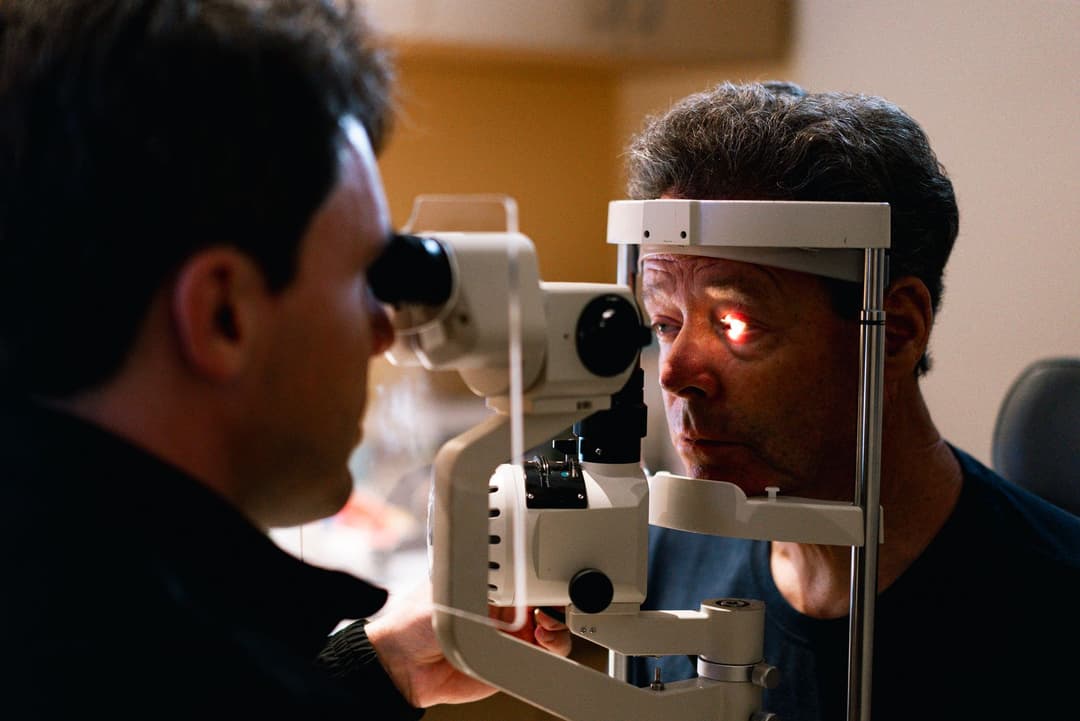
We use specialized equipment including a slit lamp microscope to examine different layers of your retina. We might take photos of your retina for documentation. We use optical coherence tomography (OCT) to create detailed cross-section images of your retina and measure any swelling.