One moment you are going about your day, and the next you notice a small dark spot drifting across your vision. Or maybe you see a brief flash of light, like lightning in the corner of your eye.
These experiences are more common than you might think. In fact, many adults notice floaters or flashes at some point in their lives. The problem is knowing whether they are harmless changes your eye makes naturally or signs that something more serious needs attention.
The uncertainty can be unsettling. Should you call your eye doctor right away, or is it safe to monitor and wait? That is exactly what this article is designed to help you figure out.
Floaters are tiny spots, specks, lines, or cobweb like shapes that appear to drift or float across your field of vision. They are most noticeable when you are looking at a bright, plain background, like a clear sky or a white wall.
What causes them? Inside your eye is a clear gel called the vitreous. This gel fills the back of the eye and helps it keep its shape. Over time, the vitreous can change. Small clumps of cells or proteins can form inside it. When light enters your eye, these clumps cast shadows on the retina, the light sensitive tissue at the back of your eye. Those shadows are what you see as floaters.
Floaters become more common as you age. They are also more frequent in people who are nearsighted or who have had eye surgery or eye trauma. Some eye conditions, like inflammation or bleeding, can also cause floaters.
Most floaters are harmless and a normal part of aging. Over time, many people get used to them and stop noticing them. However, a sudden appearance of many new floaters can sometimes signal a more serious problem, like a retinal tear or bleeding inside the eye. That is why it is important to pay attention to changes.
Light flashes, sometimes called photopsia, look like brief streaks, flickers, or flashes of light in your peripheral vision (the sides of your vision). Some people describe them as "lightning" or "sparkles." They usually last for a second or less and may come and go.
What causes them? Flashes often happen when the vitreous gel tugs or pulls on the retina. This pulling stimulates the retina, and your brain interprets that stimulation as light, even though no light is actually entering your eye. It is a mechanical effect, not a problem with how light is entering your eye.
Occasional flashes, especially in your peripheral vision, can be a normal part of aging vitreous changes. Many people experience a few flashes now and then without any serious eye problem.
New flashes that appear suddenly or that increase in frequency may signal that the vitreous is pulling more forcefully on the retina. This can sometimes lead to a retinal tear or detachment. Flashes that are new, persistent, or increasing in number deserve prompt evaluation.
Not every floater or flash means you have an emergency. Here are situations where monitoring may be appropriate:
Long standing floaters that have not changed. If you have had the same few floaters for years and they remain stable in number, size, and behavior, they are likely harmless. That said, you should still have periodic comprehensive eye exams to make sure nothing is changing.
Occasional, mild flashes in the peripheral vision. If you experience a few brief flashes now and then in the outer edges of your vision, and they have not gotten worse over time or been evaluated as concerning by an eye doctor, careful monitoring is reasonable. Keep an eye out for any changes.
Floaters or flashes that have already been evaluated. If you have seen an eye care professional who examined your retina and found no tear, detachment, or other serious problem, your eye doctor may recommend monitoring rather than immediate treatment.
Important reminder: Less concerning does not mean "never get checked." Even if floaters or flashes seem stable, regular comprehensive eye exams (typically every one to two years, more often if recommended by your doctor) are essential for protecting your long term vision.
Pay close attention to your eyes. If you notice any of the following, contact an eye care professional as soon as possible, ideally the same day:
Some of these symptoms can indicate a retinal tear or retinal detachment. The retina is the layer of light sensitive cells at the back of your eye that sends signals to your brain so you can see. If the retina tears or detaches from the wall of the eye, vision loss can happen quickly. Early detection and treatment can often preserve or restore vision. Waiting or ignoring symptoms can lead to permanent vision loss.
If you are unsure whether your symptoms are urgent, it is always better to err on the side of caution and call your eye doctor. They can advise you on how quickly you need to be seen.
Understanding what might be causing your floaters or flashes can help you know what to expect at your eye exam.
Age related vitreous changes. As we age, the vitreous gel thickens and can pull away from the retina, a process called posterior vitreous detachment. This is the most common cause of new floaters in people over 50. It is usually harmless but should be evaluated to rule out tears or detachment.
Nearsightedness. People with myopia (nearsightedness) tend to have longer eyes, and the vitreous inside can change more readily. They are at slightly higher risk for retinal problems and should have regular eye exams.
Prior eye surgery or trauma. If you have had cataract surgery, LASIK, or an eye injury, changes in the vitreous gel are more common and warrant monitoring.
Eye inflammation. Conditions that cause inflammation inside the eye can lead to floaters and sometimes flashes. These conditions require treatment.
Retinal tears and detachment. These are less common causes, but they are serious. A tear in the retina can sometimes be sealed with laser treatment if caught early. A retinal detachment requires surgery to reattach the retina and restore vision.
Bleeding inside the eye. Bleeding from blood vessels in or near the retina can cause a sudden increase in floaters and vision changes. This requires prompt evaluation and treatment.
Your eye doctor will take a careful history of your symptoms and perform a thorough examination to determine the cause of your floaters or flashes.
If you come to Clearview Eye and Laser Medical Centre with concerns about floaters or flashes, here is what typically happens:
History and symptom review. Dr. Feldman will ask you detailed questions about when you first noticed your symptoms, how they have changed, whether they are in one eye or both, and whether you have any other vision changes. This information is crucial for diagnosis.
Visual acuity check. We will measure how clearly you can see at different distances.
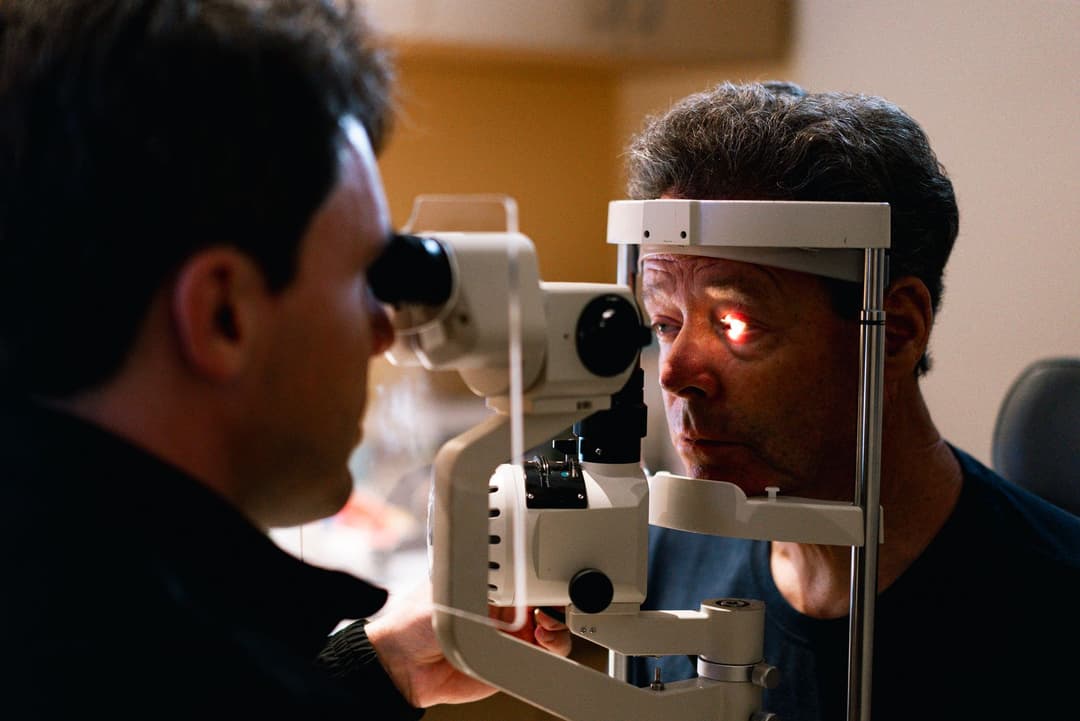
Dilated eye exam. The doctor will place dilating drops in your eyes to widen your pupils. This allows a thorough view of the retina and the vitreous gel. It takes about 15 to 20 minutes for the drops to work fully. During this time, you may notice some blurring and sensitivity to light, which is temporary and normal.
Retinal evaluation with special lenses. The doctor will use specialized lenses and lights to examine the retina closely, looking for any tears, detachment, bleeding, or other abnormalities.
Possible imaging. Depending on what is seen during the exam, the doctor may recommend optical coherence tomography (OCT), which creates detailed images of the retina, or other imaging to get a clearer picture.
The entire process is typically quick and comfortable. Most patients are surprised by how easy it is. And knowing what is going on with your eyes brings peace of mind.
What happens after your exam depends on what your eye doctor finds.
If no serious problem is found: The good news is that most people with new floaters or flashes have benign causes. Your doctor may recommend simply monitoring your symptoms, watching for any changes, and returning for follow up visits if symptoms worsen. You will receive clear instructions on what to watch for and when to call back.
If a retinal tear is found: A tear can often be treated with laser treatment in the office. The laser creates small burns around the tear to help seal it and prevent a detachment. Early treatment can prevent a more serious problem from developing.
If a retinal detachment is confirmed: This requires surgery to reattach the retina. The good news is that modern retinal surgery is highly effective, especially when caught early. There are several surgical approaches, and your retinal specialist will recommend the best option for your situation.
If another condition is found: Depending on the cause (inflammation, bleeding, or another issue), your doctor will recommend appropriate treatment and follow up care.
In all cases, your doctor will give you clear guidance about how often to be seen for follow up exams and what symptoms to watch for.
Here is the bottom line: not every floater or flash is an emergency, and most floaters are harmless. But sudden changes in your vision, especially a sudden increase in floaters, new flashes, or any shadow or darkness in your vision, are never something to ignore.
Your eyes are precious and complex. They deserve professional attention when something changes. Early detection of retinal problems can make the difference between preserving your vision and facing permanent loss. There is no downside to getting your eyes checked, and there can be real benefits to catching problems early.
If you live in the San Diego area and have noticed new floaters, flashes, or any other changes in your vision, I encourage you to contact Clearview Eye and Laser Medical Center. We offer advanced retinal evaluation, personalized care, and a commitment to protecting your long term vision health. Whether your symptoms turn out to be harmless or need treatment, our team is here to provide answers and peace of mind.
Do not wait and wonder. Call us today to schedule a comprehensive eye exam with Dr. Sandy T. Feldman. Your vision is worth it.