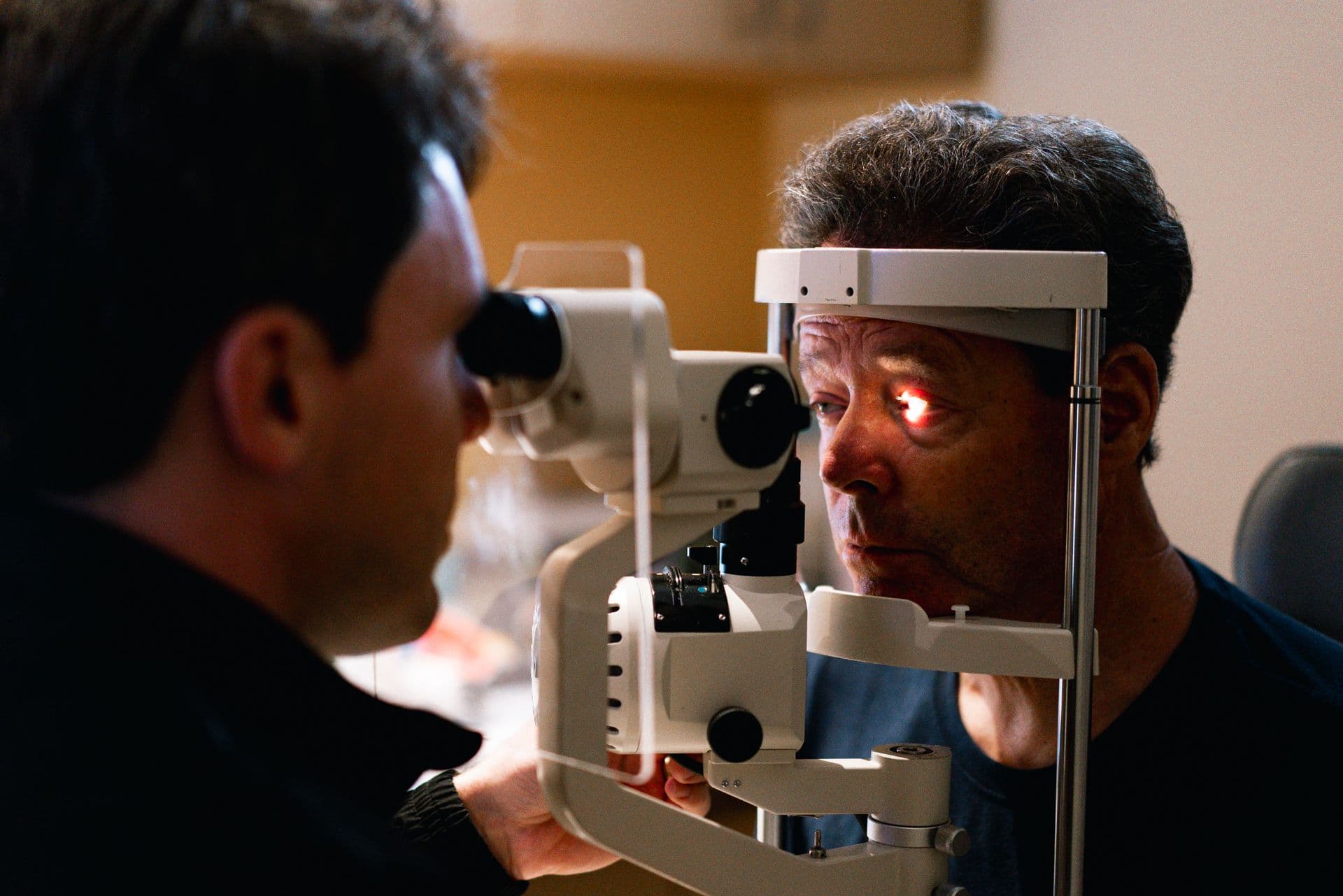
You had LASIK in your twenties or thirties. For two decades, maybe three, you never thought about glasses. Now the menu is blurry at arm's length, night driving feels harder, and you have come back to ask about a touch-up.
Here is the conversation we have with patients in this exact situation nearly every week at Clearview Eye and Laser Medical Center: your LASIK did not fail. Your eye kept aging behind it. And the right fix in 2026 is often not another laser procedure at all
Almost certainly not. LASIK permanently reshapes the cornea, and that correction holds. What changed is the natural lens sitting behind your cornea.
Around age 40, the lens begins to stiffen and lose its ability to shift focus between distance and near. This is presbyopia, and it happens to every eye, LASIK or no LASIK. Over the following decades, the lens also gradually loses clarity, scattering light and degrading contrast, particularly at night. Eventually that process becomes a cataract.
"Patients come in convinced their LASIK stopped working, and the first thing I tell them is that their cornea is usually still doing exactly what we asked it to do 20 years ago," says Dr. Sandy T. Feldman, Medical Director of Clearview Eye and Laser Medical Center. "The lens behind it is a different story. It has aged, and no laser on the cornea can turn back that clock."
Sometimes an enhancement is still the right call, and we do perform them for the right candidate. But for a patient 20 or 30 years out from their original procedure, there are three reasons we often steer the conversation elsewhere.
It treats the wrong structure. If your near vision faded because your lens stiffened, reshaping the cornea does not restore the lens's focusing ability. You would be correcting a structure that is not the problem.
Your cornea has already been treated once. An enhancement removes additional tissue from a cornea that has already been reshaped. Corneal thickness and stability matter, and we are conservative about second treatments on older flaps.
The clock keeps running. Even a technically perfect enhancement does nothing to stop the lens from continuing to age. Many patients who get a touch-up in their fifties are back within a few years, this time with an early cataract on top of the original complaint.
"An enhancement can be a fine answer for the right eye," says Dr. Feldman. "But if the lens is the real issue, a corneal touch-up buys a little time at the cost of corneal tissue, and the underlying problem is still coming. We would rather solve the actual problem once."
Refractive lens exchange, or RLE, removes the eye's natural lens and replaces it with a precision artificial intraocular lens (IOL) selected for your prescription and visual goals. It uses the same surgical technique as modern cataract surgery, one of the most commonly performed procedures in medicine, done on an outpatient basis with a short recovery for most patients.
The difference is timing and intent. Cataract surgery waits until the lens has clouded enough to qualify as a cataract. RLE replaces the lens earlier, while it is merely dysfunctional, so you get the visual benefit now instead of a decade from now.
There is a second benefit that matters to long-range planners: an artificial lens cannot develop a cataract. RLE is the one vision correction procedure that removes a future surgery from your timeline.
Yes. Prior LASIK does not disqualify you from lens replacement. It does make the measurements more demanding, because a reshaped cornea changes how we calculate the power of your new lens. This is where surgical experience and technology matter.
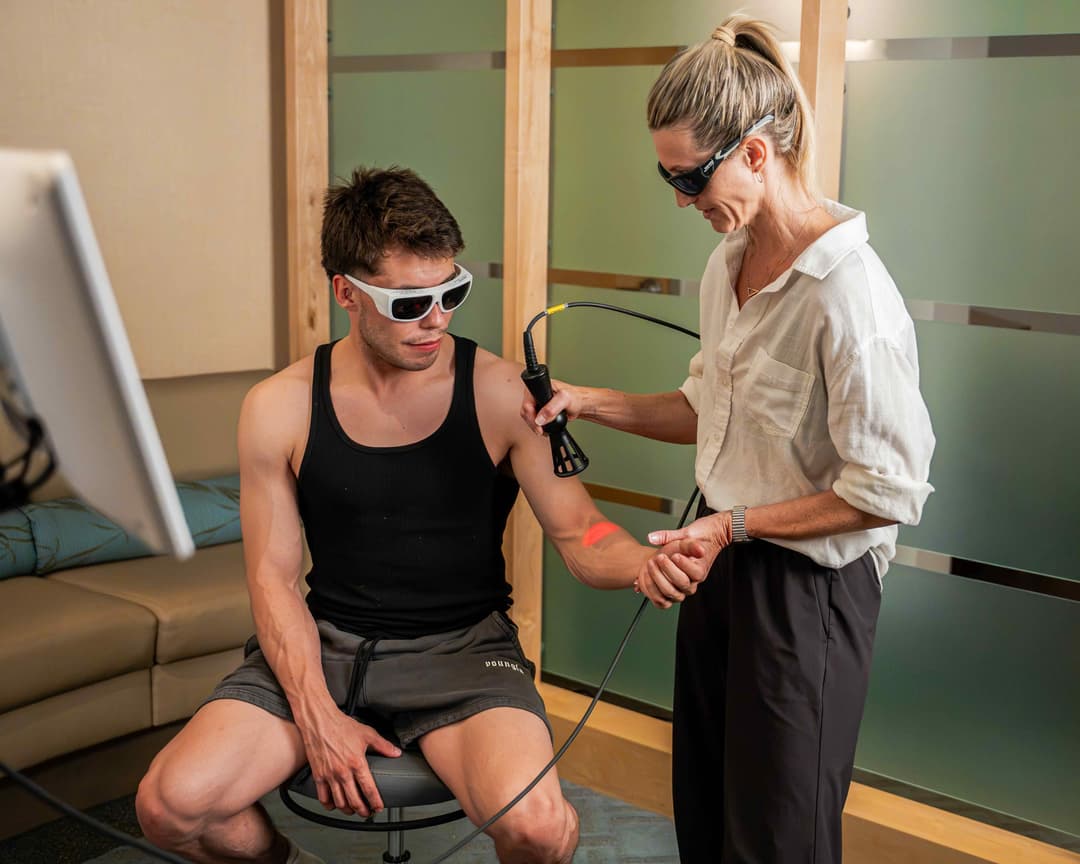
At Clearview, post-LASIK eyes are a significant part of our lens practice, and we use advanced diagnostics and modern IOL calculation methods designed specifically for previously treated corneas. For many post-LASIK patients, we also discuss the Light Adjustable Lens, an IOL whose power can be fine-tuned with light treatments after surgery. For an eye whose optics have been altered by previous laser surgery, the ability to adjust the result after implantation is a meaningful advantage.
"Post-LASIK eyes reward careful measurement," Dr. Feldman says. "The adjustability of the Light Adjustable Lens has been a genuine shift for this group of patients. We are no longer locked into a single calculation on an eye with a complicated optical history.
This is a personal decision, and it depends on how much your current vision is costing you. If glare, reading dependence, or night driving are already interfering with your life, waiting years for the lens to officially become a cataract means years of compromised vision you do not have to accept. If your symptoms are mild and your lens still scores well on our diagnostics, waiting can be perfectly reasonable, and we will tell you so.
We say no to lens surgery more often than people expect. If a patient's lens is still performing, there is no reason to rush. Our job in the consultation is to show you exactly where your lens is in its aging process so the decision is grounded in data, not sales pressure.
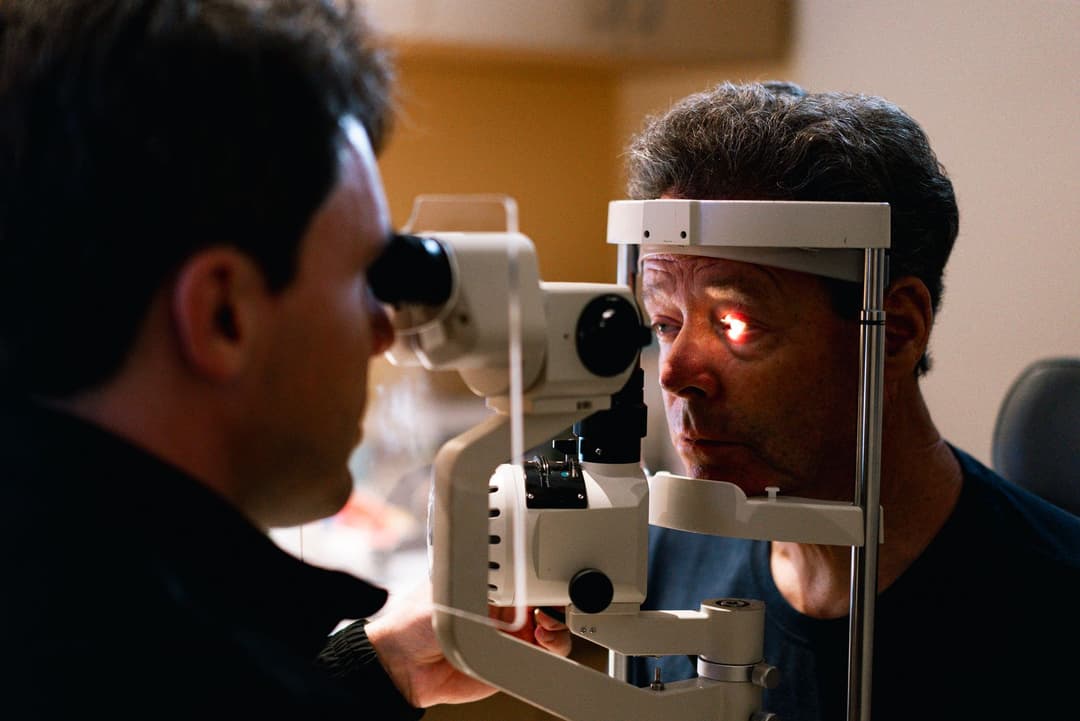
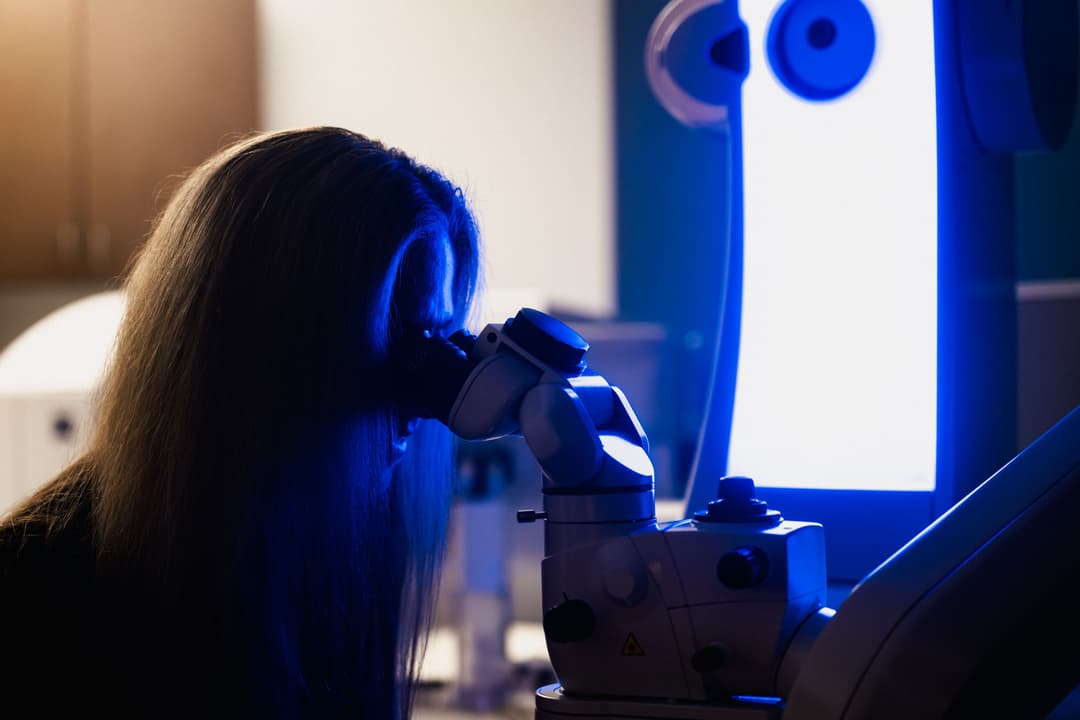
Start with a comprehensive lens evaluation. At Clearview, we measure the health of your cornea, the clarity and function of your natural lens, and the overall optical quality of your eye. Then we walk you through the findings together. Some returning LASIK patients leave scheduled for an enhancement. Many leave with a lens plan instead. Either way, you leave understanding why.
If you had LASIK 20 or 30 years ago and your vision is changing, that is not a failure. It is the next chapter, and there is a modern answer for it.
Call Clearview Eye and Laser Medical Center at 858-452-3937 or visit us at 6255 Lusk Blvd, Suite 100, San Diego, CA 92121 to schedule your evaluation.
Does LASIK wear off after 20 years? No. LASIK permanently reshapes the cornea and that correction is stable. Vision changes decades later are almost always caused by the natural aging of the lens inside the eye, including presbyopia and early cataract formation.
Can I get a LASIK enhancement 20 or 30 years after my original surgery? Sometimes, but candidacy is evaluated carefully. An enhancement removes additional corneal tissue and does not address age-related lens changes, so for many long-term post-LASIK patients a lens-based procedure is the better solution.
Is refractive lens exchange safe after LASIK? Yes, prior LASIK does not disqualify you. Lens power calculations are more complex on a previously treated cornea, which is why choosing a surgeon experienced with post-LASIK eyes and advanced diagnostics is important.
What is the difference between RLE and cataract surgery? The procedure is essentially the same. RLE replaces the lens before a cataract has formed, restoring vision earlier, while cataract surgery waits until the lens has significantly clouded. A replaced lens can never develop a cataract.
What lens options are available for post-LASIK patients? Options depend on your eyes and goals, and may include monofocal, extended range, and adjustable lenses. The Light Adjustable Lens is often discussed for post-LASIK eyes because its power can be fine-tuned after surgery.