

Real outcomes data from Clearview Eye and Laser in San Diego, including patients with prior LASIK, PRK, and RK. Most lens implant claims come from national studies of other surgeons' patients. This data is different. It comes from our own operating room. We recently reviewed outcomes across 161 Light Adjustable Lens (LAL) eyes treated at Clearview Eye and Laser by Dr. Sandy T. Feldman and Dr. Michael L. Mathison. The results speak for themselves.
Of eyes targeted for distance vision:
Among eyes targeted for near vision, 93% could read at J3 or better, the range for comfortable everyday reading, and more than half reached J1, the smallest standard print size on a near vision chart.
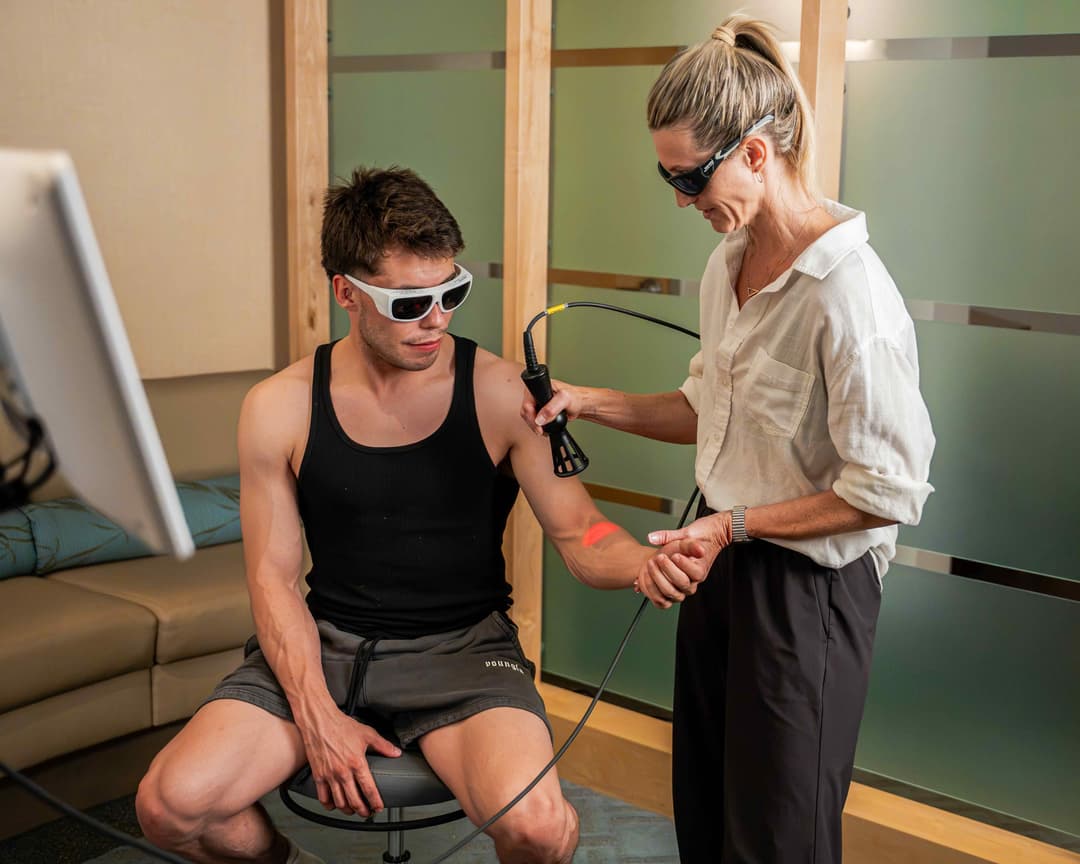
This is where the LAL separates itself. The lens is adjusted with light after surgery, once the eye has healed, so the final prescription is dialed in rather than predicted.
For context, 0.50 diopters is a small enough difference that most people would not notice it in daily life.
This may be the most important finding in our dataset.
Patients with previous LASIK, PRK, or RK are traditionally the hardest to hit with a lens implant. Prior laser surgery changes the shape of the cornea, which throws off the formulas used to calculate lens power. These patients are often told to expect a less predictable result.
Our post-refractive eyes performed almost identically to eyes with no prior surgery:
Because the LAL is fine-tuned after the eye heals, the guesswork that penalizes post-LASIK patients is largely removed. If you had LASIK in the 1990s or 2000s and are now facing cataract surgery, this matters for you.
In our series, 83% of eyes needed only one or two light treatments to reach their final prescription. The remaining 17% needed a third. Each adjustment is a brief, painless office visit.
Averages are not guarantees, and every eye is different. But when a practice can show its own outcomes rather than quoting a brochure, you know what you are actually signing up for.
If you are considering cataract surgery or refractive lens exchange, and especially if you have had LASIK, PRK, or RK in the past, the Light Adjustable Lens deserves a serious look.
What is the Light Adjustable Lens? The LAL is the only intraocular lens that can be adjusted after cataract or lens replacement surgery. Once your eye heals, your surgeon uses targeted UV light treatments to fine-tune the lens power to your vision, then locks in the result.
What percentage of Light Adjustable Lens patients see 20/20? In our outcomes data at Clearview Eye and Laser, 93% of eyes targeted for distance vision saw 20/20 or better without glasses, and 98% saw 20/40 or better.
Does the Light Adjustable Lens work after LASIK? Yes. In our data, eyes with prior LASIK, PRK, or RK achieved results nearly identical to eyes with no prior surgery: 96% landed within 0.50 diopters of target and 92% of distance-targeted eyes saw 20/20 or better without correction.
How many light adjustments does the LAL require? Most patients in our series, 83%, needed only one or two light treatments before lock-in. Each is a short, painless office visit.
Is 20/15 vision better than 20/20? Yes. 20/15 means you can see at 20 feet what a person with standard vision sees at 15 feet. In our data, 36% of distance-targeted LAL eyes achieved 20/15.